
AI adoption, diversity of thought and the consequences for organisational decision-making.
AI is here and we have been focused on capturing the efficiencies. But II think another consideration is emerging, and it's one we need to take seriously.
AI-generated work is becoming increasingly polished and research is beginning to show that individual outputs are improving while becoming more similar. There is also emerging evidence that people readily concur with AI-generated recommendations, potentially reducing the independence of their decisions even more. Diversity of thought is key to identifying risks and developing original ideas.
This was one of my strongest takeaways from the ADIA Lab Symposium in Abu Dhabi in Oct 2026, where research presented by Harvard Business School's Karim Lakhani, UCL's Carlos Galera-Zarco and MIT's Alex “Sandy” Pentland approached the issue from different perspectives. Their findings, alongside a growing body of independent research, raise important questions about the consequences of AI adoption for collective judgement and organisational performance.
How much AI are people actually using?
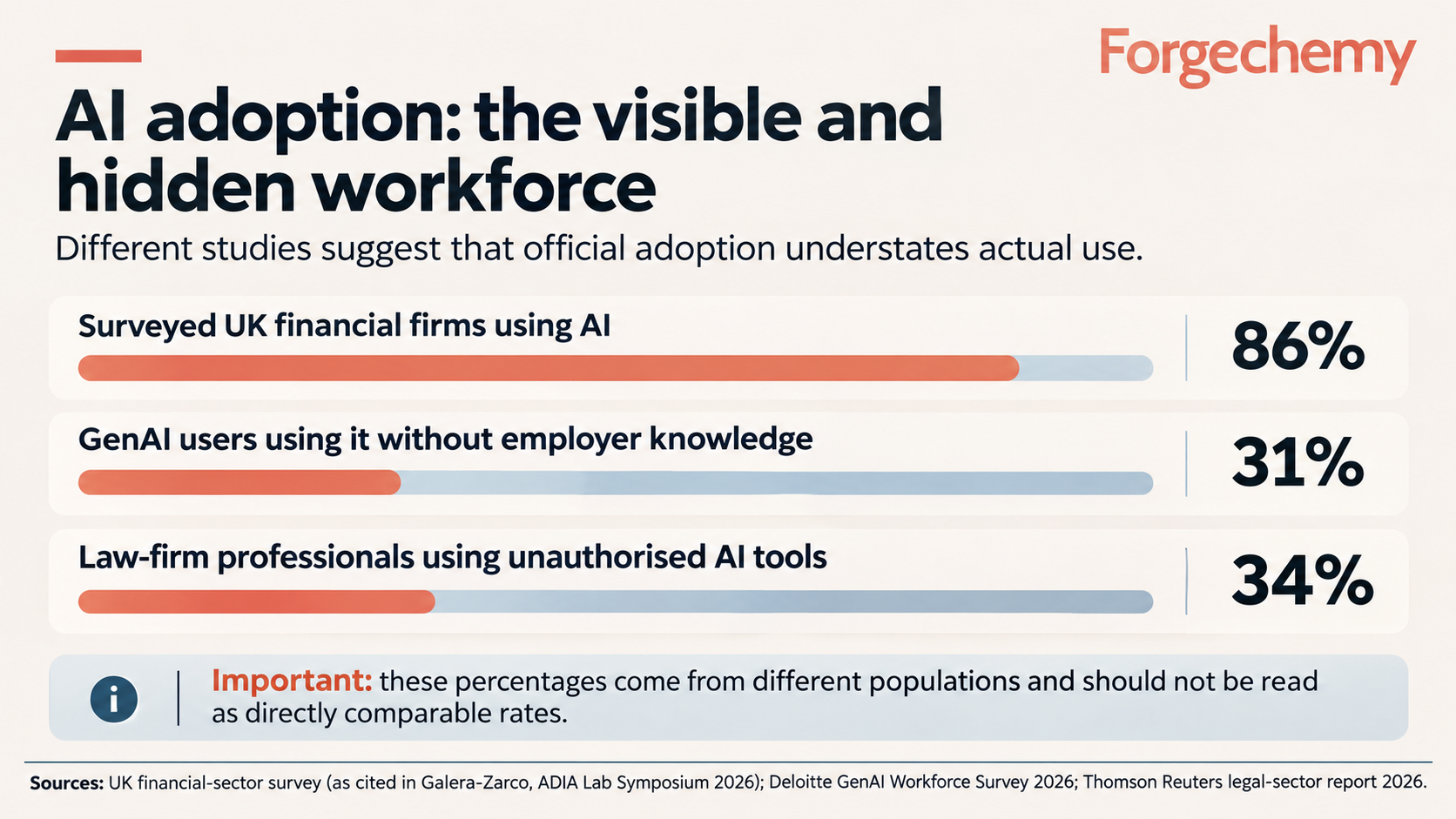
Deloitte's September 2026 GenAI Workforce Survey of 25,000 UK workers found that 63% reported knowingly using GenAI for work, although only 24% used it daily with it being higher in ta financial sector survey. The findings also revealed substantial informal adoption, with employees using tools independently of organisational approval and, in some cases, paying for them personally.
This creates a gap between the technology organisations believe they have deployed and the AI that employees are actually using. Formal adoption statistics may therefore underrepresent the extent to which AI has entered everyday workflows and begun influencing how employees research, analyse and prepare their work.
How people use AI matters as much as how many use it
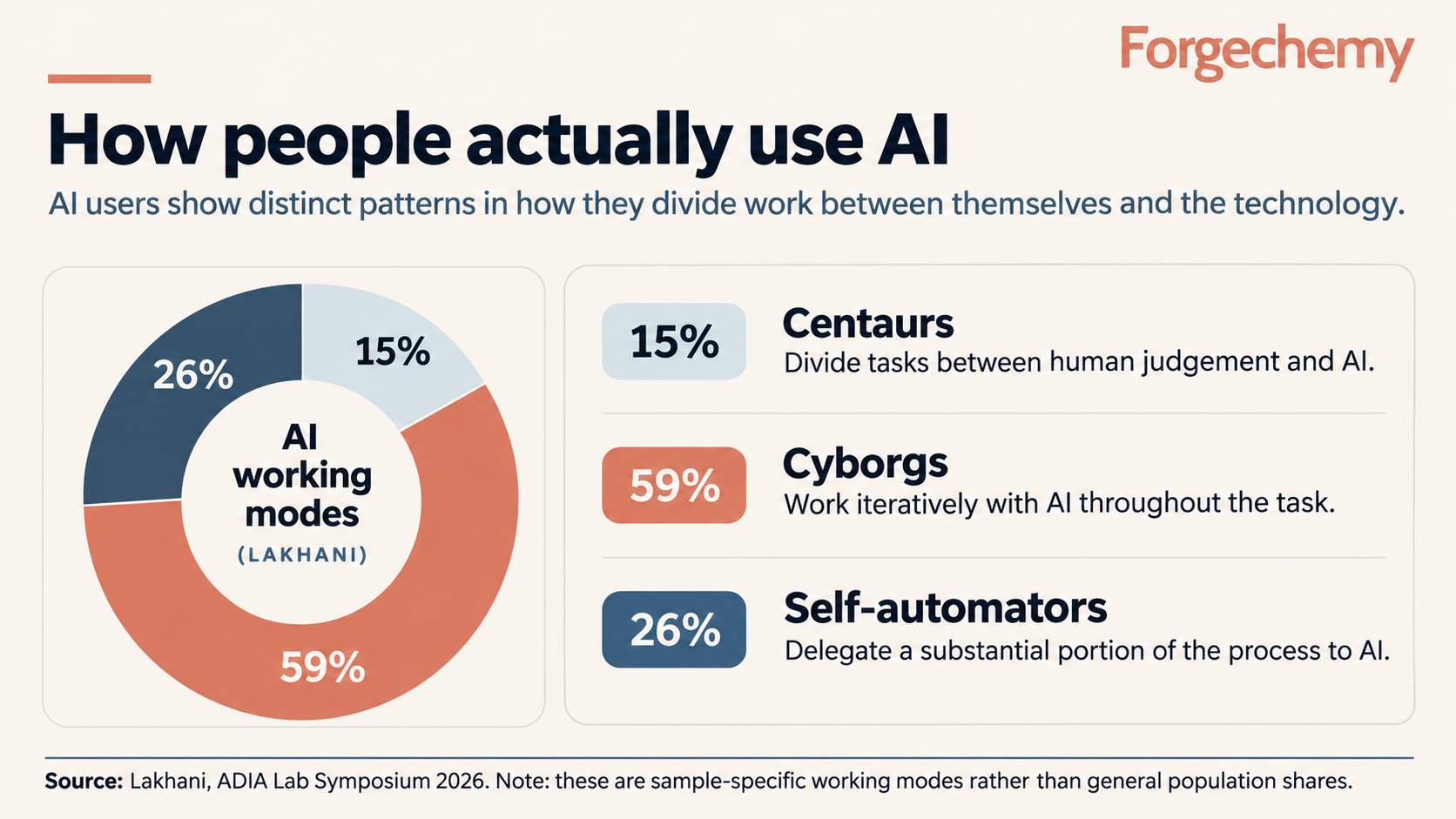
The prevalence of AI tells us relatively little about the extent of cognitive delegation taking place. Lakhani's presentation distinguished three patterns of human-AI collaboration, illustrating how differently people distribute work between themselves and the technology.
These patterns are behavioural rather than fixed personality types and depend on user’s expertise and the task. Nevertheless, they have important implications for the exercise of independent judgement.
An employee who uses AI to summarise evidence while independently evaluating its implications retains a different relationship with the work from someone who repeatedly consults the model throughout their analysis. Employees who delegate most of the cognitive process may remain accountable for the final recommendation while having contributed comparatively little independent reasoning.
Two organisations could therefore report identical adoption rates while experiencing very different changes to their cognitive processes. Measuring usage without understanding the nature of that usage offers an incomplete picture of organisational transformation.
Productivity gains are substantial, but uneven
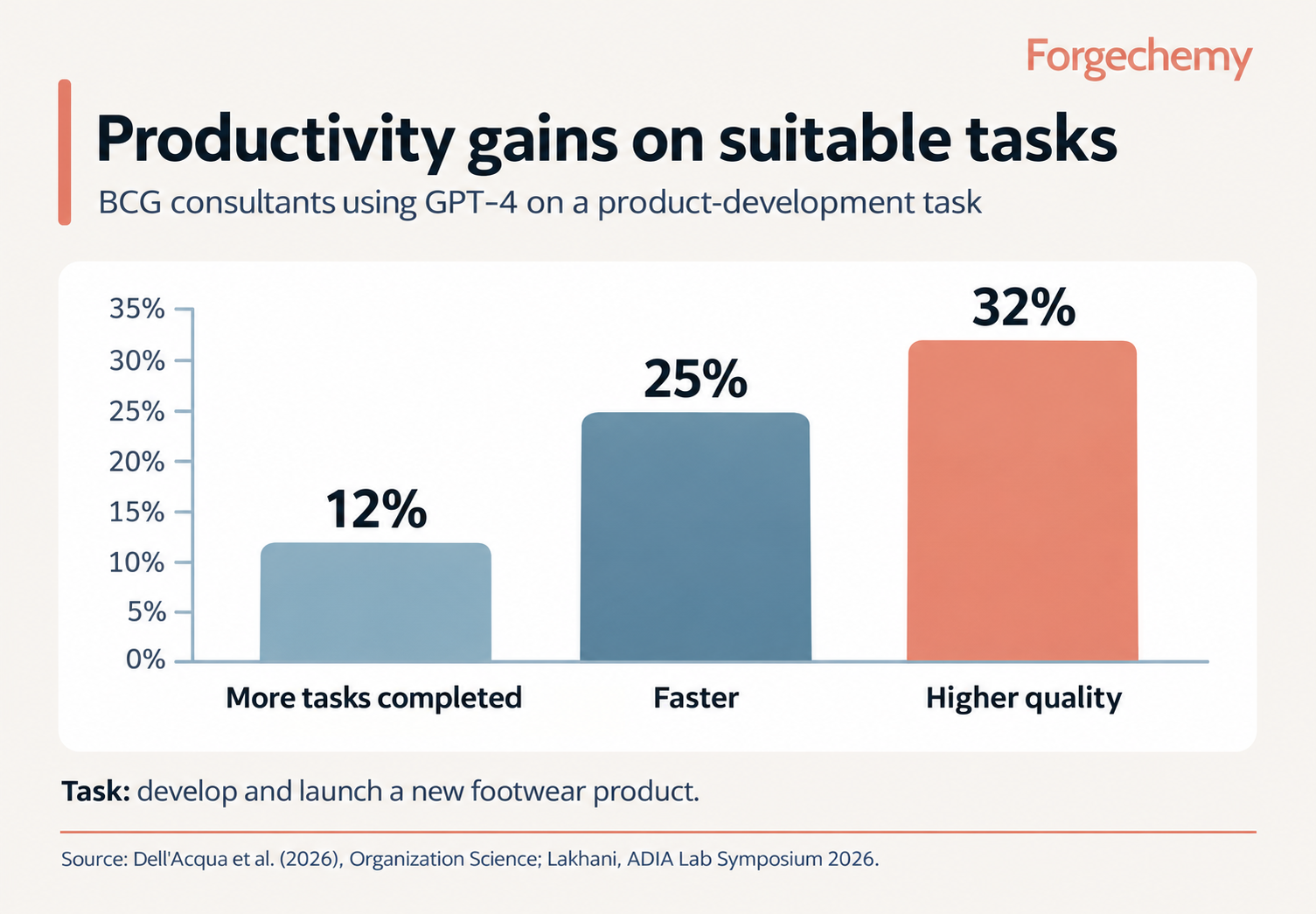
In a study involving 758 BCG consultants, researchers tested GPT-4 on two business problems. The first involved developing and launching a new footwear product, where AI helped consultants work faster, complete more tasks and produce higher-quality results.
The second task required consultants to recommend which of three clothing brands a company should invest in. The financial data appeared to point towards one answer, but important clues in management interviews suggested another. AI produced convincing analysis that often led consultants towards the wrong recommendation, leaving those using it less accurate than those working independently.
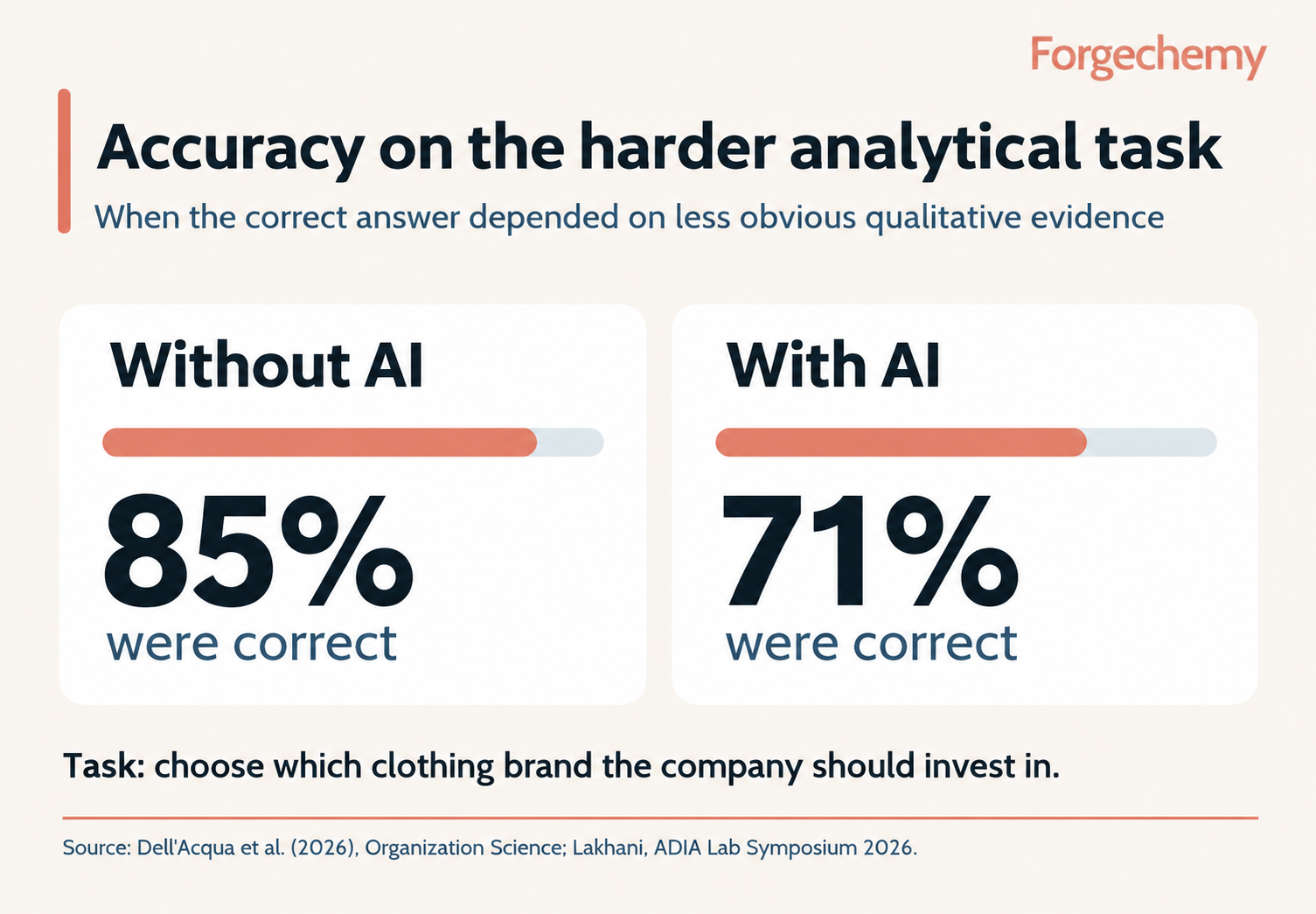
The researchers called this the jagged technological frontier. AI can be exceptionally good at one task and unreliable at another, even when both appear well suited to it. The real difficulty is knowing when to trust the results, particularly when an incorrect answer can look just as convincing as a correct one.
This creates a behavioural challenge because a fluent, persuasive recommendation can encourage reliance even when its underlying analysis is unreliable. Galera-Zarco discussed research involving 319 knowledge workers and 936 real-world examples in which greater confidence in GenAI was associated with lower self-reported critical-thinking effort (Lee et al., 2025).
Look, this observational finding does not establish that AI permanently diminishes people's cognitive abilities, but it does suggest that confidence in machine-generated responses influences how much effort users devote to evaluating them. At organisational scale, changes in “verification behaviour” could become significant when repeated across thousands of decisions.
The convergence paradox: better individual results, less collective diversity
However, I think this is where it gets really interesting. One of the most striking findings in Lakhani's presentation concerned the similarity of AI-assisted submissions. Although individual performance improved, participants' outputs became more alike, suggesting that productivity measures focused on average quality may conceal a fall in the collective diversity of ideas.
Experimental evidence published in Science Advances by Anil Doshi and Oliver Hauser (2024) illustrates the effect. In a study involving 293 short stories, participants given access to AI-generated ideas produced work evaluated as more creative and better written, particularly among less-creative writers. However, their stories were also became more similar. Lost diversity, again.
For the data scientists, amongst you, a 2026 systematic review and meta-analysis by Alwin de Rooij and Michael Mose Biskjaer strengthened this finding. Examining 19 studies and 61 effect sizes, the researchers identified a small but statistically significant overall homogenisation effect (Cohen's d = 0.334).
Lakhani's research with Procter & Gamble provides an interesting example of convergence between previously distinct professional perspectives. Without AI, R&D specialists tended to propose more technical solutions, while commercial specialists focused on market considerations. With AI, participants from both groups produced solutions incorporating more of both perspectives, reducing the distinction between their disciplinary approaches.
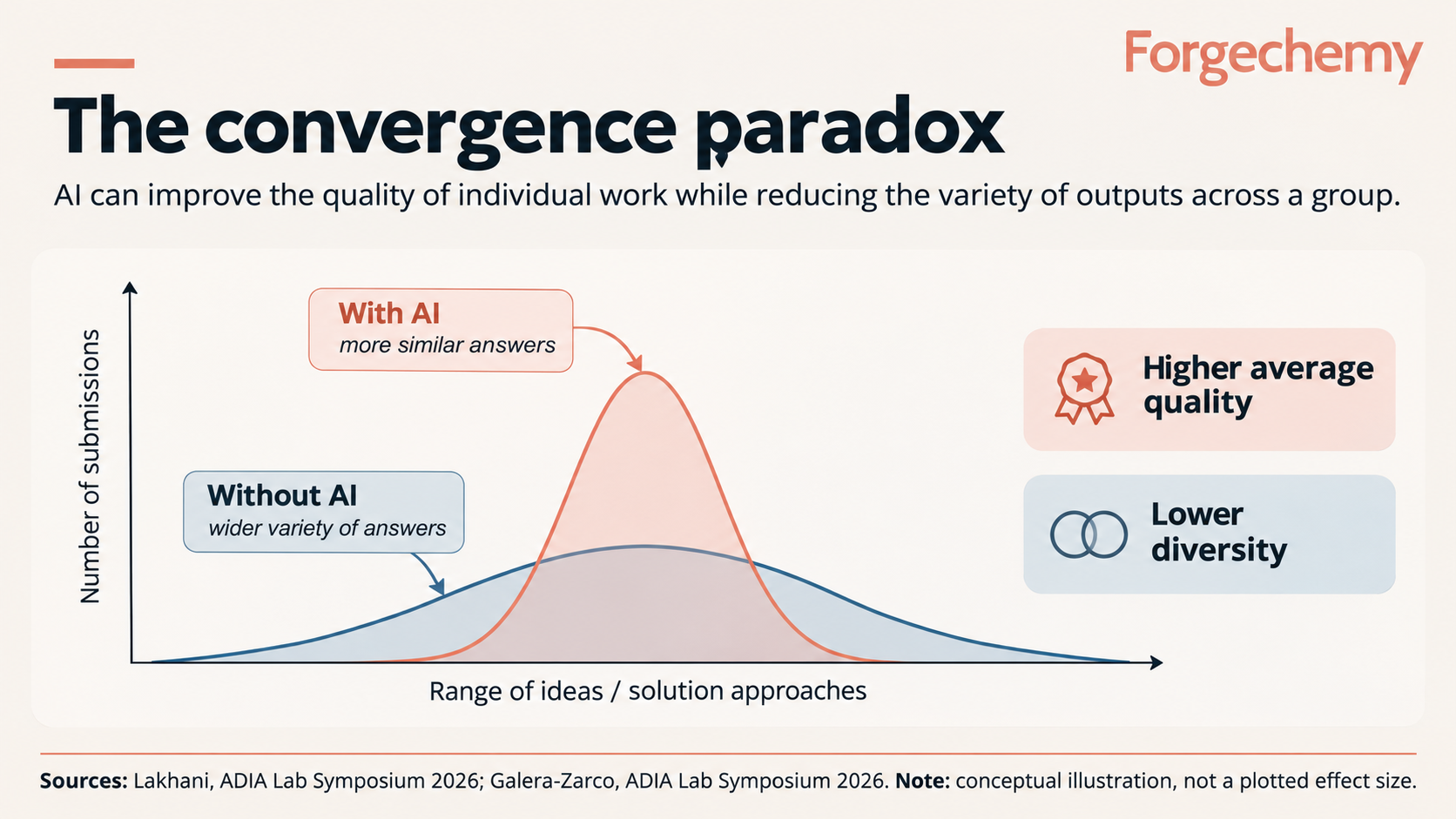
Interestingly, this convergence isn't necessarily a bad thing. Teams using AI were also more likely to come up with exceptional ideas, having used AI for the processing. So while AI may make our thinking more alike, it can also help us produce better results. The challenge is knowing when that similarity is useful and when we risk losing valuable differences in perspective. So again, we need to assign the correct AI to the correct task.
When outputs and decisions begin to converge
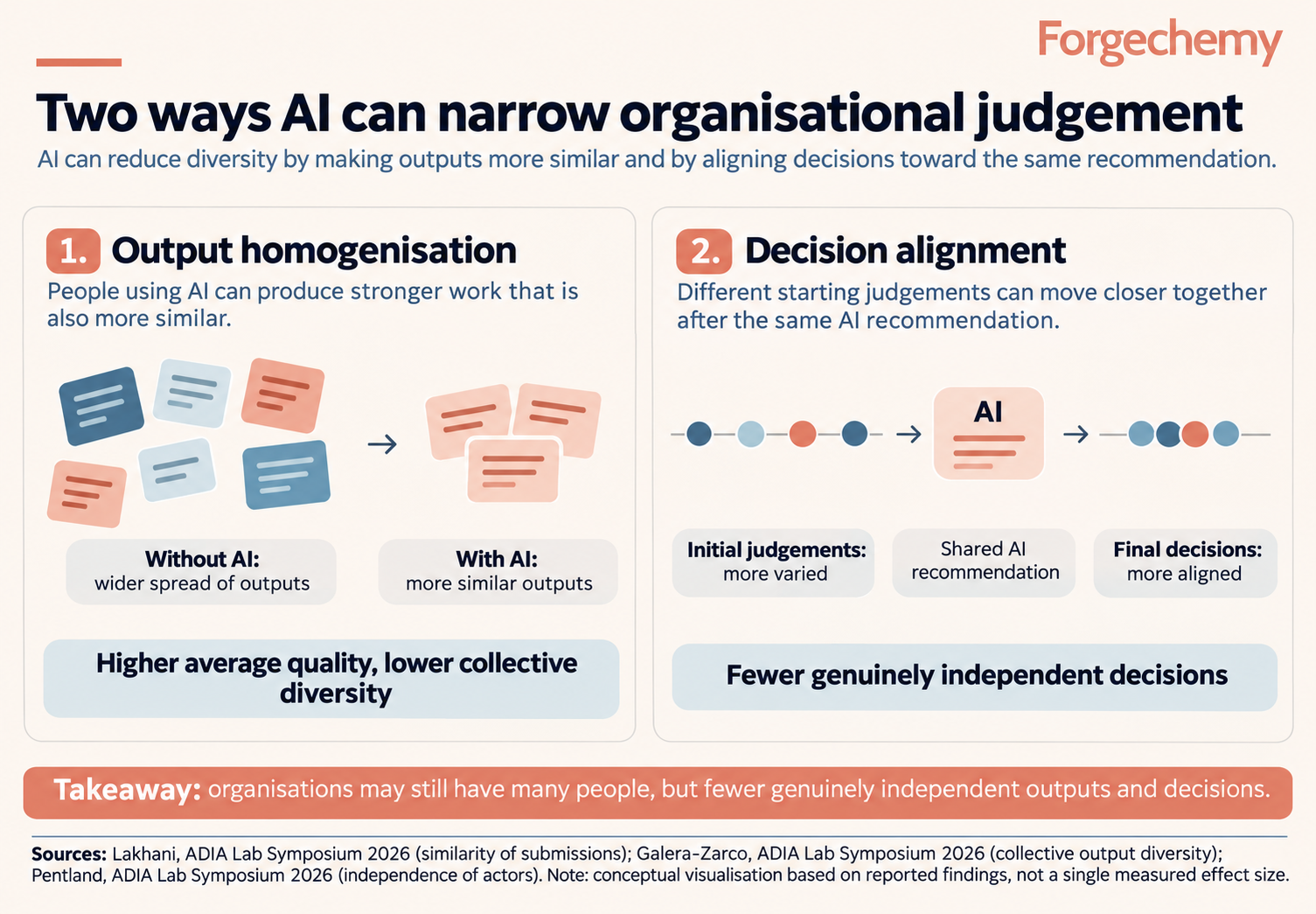
The similarity of creative and analytical outputs is only one dimension of the issue. A related body of research examines how AI influences the judgements people make, raising questions about whether apparently independent decisions are becoming more closely aligned.
Research published in the Journal of Organizational Behavior by Smith and colleagues examined factors influencing decision convergence within human-AI teams. The experiments demonstrated that characteristics of AI advice and the surrounding decision environment influence the likelihood of individuals aligning with AI-supported recommendations.
Pentland raised a potentially serious concern in financial markets. If AI-driven traders rely on similar data and models, they may reach the same conclusions and act at the same time. Instead of independent decisions balancing one another, their actions can reinforce each other, increasing the risk of sudden market swings.
The same concern applies to leadership teams. Different professional backgrounds and experience should bring different perspectives to a decision. But if everyone consults similar AI-generated analysis before forming their own views, they may arrive at the meeting already leaning towards the same conclusion. What appears to be consensus could simply be a set of shared assumptions, leaving fewer people to spot weaknesses, challenge the recommendation or identify alternatives before a costly decision is made.
The graphic shows two ways AI may be making us more alike: by producing similar work and by influencing us to make similar decisions. There is stronger evidence for the first, while we're still learning about the second. What we don't yet know is whether these changes will affect our ability to think independently over time. Though, I have my suspicions…
What does this mean for organisations?
The potential consequences are particularly significant where decision quality depends on competing interpretations. Investment committees, executive boards, professional-services teams and research organisations rely on different perspectives to expose weaknesses in proposals, challenge assumptions and identify opportunities that an individual analyst might overlook.
As AI-generated analysis becomes more similar, organisations risk having fewer genuinely different options to consider. And if people increasingly follow the same AI recommendations, teams may appear to agree on a decision without anyone having independently challenged the thinking behind it.
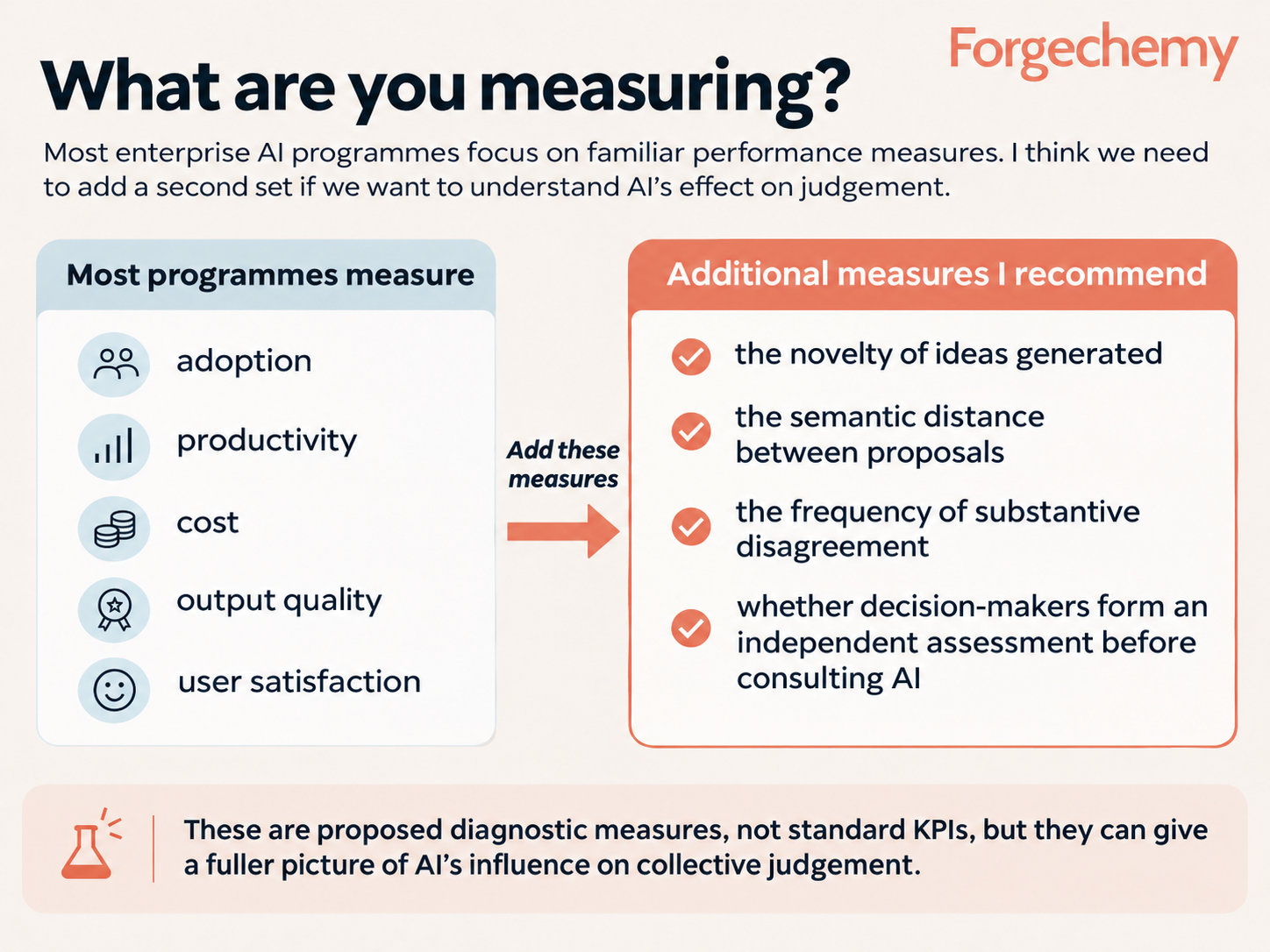
This remains a hypothesis about organisation-wide effects rather than an established universal outcome. Nevertheless, it raises questions about what businesses should measure when evaluating their return on AI investment.
There are practical ways to nudge and improve how people make decisions. In one study, professional auditors were reminded of their peers' high standards, prior to starting the tasks, and asked to justify their conclusions with evidence. These simple prompts helped them identify approximately 50% more instances of potentially aggressive financial reporting than the control group, who were not ‘nudged’.. Professor Carlos Galera-Zarco highlighted similar findings from an experiment involving 199 participants, where encouraging people to pause and question AI recommendations reduced their tendency to accept incorrect answers, although they preferred the easier option. Both studies suggest that small changes to how we work can significantly improve the quality of our judgement.
Preserving diversity of thought as adoption accelerates
So, AI adoption is fully on us, no matter where you are on the adoption curve. We know AI can make us faster and improve the quality of our work, but we're beginning to see another consequence. Our ideas and outputs can become more alike, and we may be more inclined to accept AI's recommendations without questioning them. These are changes that most organisations aren't measuring.
We don't yet know whether using AI will affect our ability to think independently in the long term ( but there are clues, and it ain’t good). There is already enough evidence to question whether, in chasing efficiencies, we're losing some of the different perspectives that help us make better decisions.
For organisations whose competitive advantage depends on judgement, innovation, risk assessment and differentiated thinking, these effects warrant investigation alongside the efficiencies being realised.
I believe diversity of judgement should become part of how organisations evaluate successful AI adoption. Understanding whether AI improves decisions while preserving independent thinking may prove as important as measuring how much time it saves.
Sources
Buçinca, Z., Malaya, M. B., & Gajos, K. Z. (2021). To Trust or to Think: Cognitive Forcing Functions Can Reduce Overreliance on AI. DOI.
Dell'Acqua, F., et al. (2026). Navigating the Jagged Technological Frontier. Organization Science. DOI.
Dell'Acqua, F., et al. (2026). The Cybernetic Teammate. Organization Science. DOI.
Deloitte (2026). GenAI Workforce Survey. Deloitte UK.
de Rooij, A., & Biskjaer, M. M. (2026). Does Generative AI Make Us Think Alike? Behaviour & Information Technology. DOI.
Doshi, A. R., & Hauser, O. P. (2024). Generative AI Enhances Individual Creativity but Reduces the Collective Diversity of Novel Content. Science Advances. DOI.
Galera-Zarco, C. (2026). The Shadow Agent: Governing Unseen Delegation in the AI-Driven Economy. [Conference presentation]. ADIA Lab Symposium 2026, Abu Dhabi, United Arab Emirates.
Lakhani, K. R. (2026, October 28). The Jagged Frontier of Deployment: Field Experimental Evidence on How AI Changes Work, Teams, and Strategy [Conference presentation]. ADIA Lab Symposium 2026, Abu Dhabi, United Arab Emirates.
Lakhani, K. R.; Galera-Zarco, C.; and Pentland, A. (2026). Presentations at the ADIA Lab Symposium, Abu Dhabi. Materials held in the Forgechemy research archive.
Lee, H.-P., et al. (2025). The Impact of Generative AI on Critical Thinking. CHI 2025. DOI.
Smith, A., et al. (2025). Navigating AI Convergence in Human-Artificial Intelligence Teams. Journal of Organizational Behavior. DOI.
Thomson Reuters (2026). Future of Professionals Report 2026. Thomson Reuters.
Photo by Mike Petrucci on Unsplash